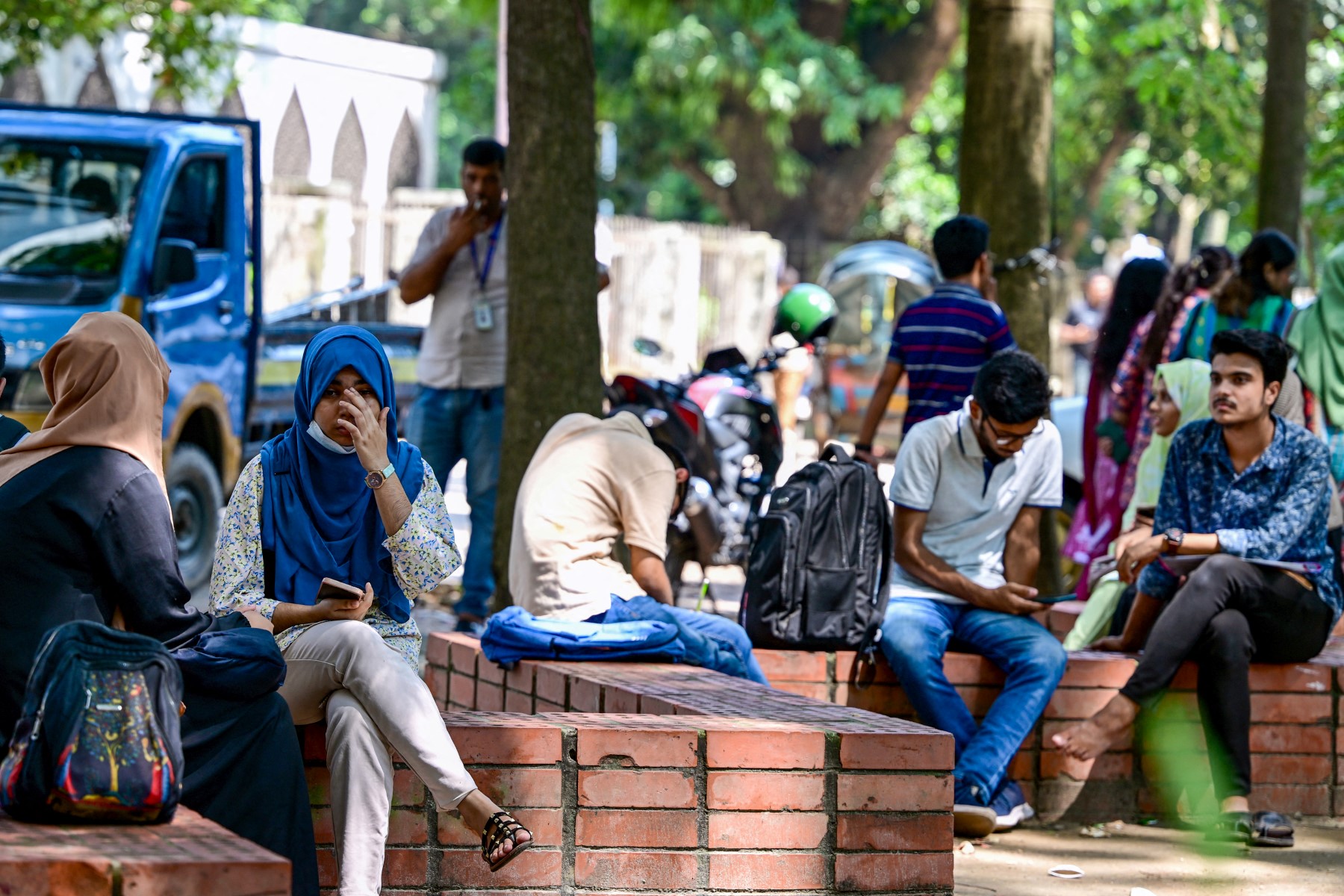
Every year, Bangladesh produces about 700,000 new graduates who enter the job market. For decades, the country has celebrated its achievements in education. The growth of universities and the increasing number of graduates are seen as signs of national development. Bangladesh now has one of the youngest populations globally, with around 67 percent of people of working age. However, beneath this surface of progress is a troubling contradiction: Bangladesh is generating hundreds of thousands of degree holders each year while also facing a serious shortage of skilled workers. The country is dealing with both high graduate unemployment and a lack of skilled labor, which threatens its long-term economic goals.
Bangladesh has a growing population and ambitious growth goals. It faces a significant challenge: there are many graduates with degrees but not enough skilled workers. This article looks at the evidence for this imbalance. It uses recent labor market data, employer feedback, and education statistics to evaluate if the country's education system is producing too many academics while not investing enough in practical skills. The problem lies in the imbalance between academic qualifications and practical skills.
"A nation flooded with degrees but starving for skills stands at a crossroads between illusion and real progress."
The Number of Disconnect and the surge of Expansion of Higher Education institute
Statistical reality of Bangladesh's labor market is stark. According to the latest Bangladesh Bureau of Statistics (BBS) Labor Force Survey, the unemployment rate among university graduates has risen to 13.5%, a significant increase from just 4.9% in 2010. In a telling paradox, unemployment is lowest at only 1.25% among those with no formal education. This means that one in every three unemployed individuals in Bangladesh today is a graduate. This represents nearly 900,000 jobless degree-holders, a number that has doubled in just eight years.
Bangladesh's higher education sector has grown rapidly in recent years. There are over 100 public and private universities, along with thousands of colleges that together produce hundreds of thousands of graduates each year. Estimates indicate that more than 700,000 new graduates join the labor market annually. This growth shows increased access to education, as enrollment rates rise in post-secondary institutions. However, the surge in degrees has not been matched by an increase in job opportunities, raising concerns about an excess of graduates.
In the past two decades, the higher-education sector in Bangladesh has grown at a rapid pace. Today home to over 150 universities — both public and private, with thousands of affiliated colleges giving undergraduate and postgraduate degrees. Every year thousands of students complete their degrees in business administration, social sciences, humanities and general sciences.
This oversupply is underpinned by a constantly growing higher education pipeline. The University Grants Commission (UGC) also cautioned that more than 700,000 graduates join the labor market every year. In the year 2022, approximately over seven lakh graduates were produced in Bangladesh, of which just under six lakh enrolled with the National University and its affiliated colleges. These institutions are notoriously rife with sub-par teaching standards, dated curricula and weak links to industries. As a result, the unemployment rate of National University graduates is the highest because Bdjobs.com that 35 percent are still jobless by age 30. The Bangladesh Employers' Federation estimates that even under ideal conditions, the country can absorb at most 300,000 graduates annually, less than half of the number produce each year. The World Future Skills Index 2025 ranked Bangladesh 67th out of 81 countries in producing graduates with employer aligned skills, scoring just 39.1. Whose stories of joblessness despite years of study have become emblematic in a state of perpetual waiting, their degrees rendered worthless.
The Skills Mismatch: Why Graduates Aren't Hirable
The crux of the current crisis extends beyond a mere quantitative oversupply of graduates; it reveals a deeper qualitative mismatch in education. Experts have highlighted that many private universities, often influenced by business interests and political agendas, seem to focus more on issuing degrees than on providing substantial educational value. Sadly, regulatory bodies have been slow to respond to this trend. As a result, a considerable number of graduates from these rapidly proliferating institutions encounter significant difficulties in meeting employment standards, primarily due to a pronounced skills gap.
Understanding the Mismatch in Employment and Skills The persistent mismatch between education and employment opportunities can be traced back to three fundamental issues:
1. Cultural Emphasis on Degrees:Society still holds a deep-seated belief that a bachelor’s degree is essential for achieving status and securing government positions. This perspective often relegates vocational training to a secondary role, despite the fact that our economy relies heavily on sectors such as ready-made garments (RMG), construction, light engineering, and various services. These industries urgently require skilled mid-level technicians, yet the cultural narrative continues to undervalue their importance.
2. An Education System Focused on Exams Rather than Employment: The current education system largely prioritizes rote memorization and outdated curricula, sidelining critical soft skills such as communication, problem-solving, and teamwork. Moreover, digital literacy and industry-specific training are often treated as secondary concerns. A 2026 study revealed a staggering 60.78% skills mismatch between what graduates can offer and what employers actually seek, particularly in areas like analytical thinking and technical competencies.
3. Challenges in Job Creation and Economic Structure: While the economy continues to grow, private investment has stagnated, leading to structural issues in job creation. In fact, gross investment as a percentage of GDP declined in FY25. The elasticity of employment has also turned negative, indicating that GDP growth no longer correlates with job creation at the same rate. Furthermore, the formal job market remains limited, with a staggering 84% of employment categorized as informal. Understanding these factors is crucial as we work towards creating a labor market that better aligns educational outcomes with the needs of employers, fostering a more competent and capable workforce.
Unemployment and Underemployment Among Graduates
The growing disparity in the job market has brought about a significant challenge: rising unemployment and underemployment among university graduates. Many individuals who have invested in their education find themselves in positions that do not align with their skills or qualifications, which can lead to feelings of frustration and a sense of potential unfulfilled. Several trends have emerged in this situation: -
Over qualification: Graduates frequently accept jobs that do not require a degree, which can diminish their career satisfaction.
Job Mismatch: Many individuals are employed in fields that are unrelated to their academic background, leading to a disconnection between their education and work.
Extended Job Search: Graduates are experiencing longer periods of searching for suitable employment, making the transition into the workforce challenging. This issue extends beyond personal struggles; it carries significant economic consequences. When educated youth remain without fulfilling employment, we not only compromise individual growth but also forfeit valuable productivity and human capital that could contribute to a more dynamic economy.
The Underexplored Promise of Technical and Vocational Education
As the traditional education system struggles to produce graduates equipped for the job market, the Technical and Vocational Education and Training (TVET) sector designed precisely to bridge this gap remains significantly underused. The government has ambitious plans to increase the percentage of students engaged in technical education from 16 per cent today to 30 per cent by 2030. Yet, this goal faces challenges due to low enrollment rates and unsatisfactory outcomes, which have not instilled confidence among students and their families. Despite nearly 7,800 technical and vocational institutions across the country, their potential largely remains untapped. Nonetheless, innovative solutions are beginning to emerge. One promising initiative is an industry-sponsored attachment pilot program, backed by the International Labour Organization (ILO). This program redefines the traditional internship model for diploma students by introducing a structured approach that includes student pre-screening, a month of preparatory training focusing on digital and soft skills, followed by three months of supervised, industry-based training. The results from this program have been encouraging. Industry partners, such as BSRM Group, have observed notable enhancements in student professionalism and have found that the pre-screening process significantly lowers recruitment costs. One participant, Nabiha Marzan, a civil engineering student at Chattogram Polytechnic Institute, shared that the training not only honed her communication skills but also bolstered her confidence, facilitating her transition into the professional world. By mid-January 2026, many of the 45 students involved in the pilot had moved on to job interviews and received employment offers from their respective host companies. This model underscores the vital role of structured public-private partnerships in cultivating a skilled workforce and highlights the untapped potential that lies within the TVET sector.
Industry Perspective: Demand for Labor
When you look at things from the point of view of the people who own the companies the problem is not the same. The industries that are helping Bangladesh grow they need workers who have skills.
For example:
1) The garment and manufacturing sector needs people who can fix machines and make sure they are working properly. They also need people who can check the quality of the products.
2) The construction industry needs people who're good with electricity people who can weld and people who are engineers.
3) The IT sector needs people who can write programs develop software and keep the computers safe, from hackers.
Even though there are a lot of people looking for jobs the companies say that the people who apply do not have the training and experience. So the companies have to teach their workers themselves or even hire people from countries who have the skills they need.
Cultural and so called ”সামাজিক” Perceptions
The way people think about education and work is a part of the problem. In Bangladesh people really want white-collar jobs and academic degrees. They do not think that vocational training is a way to get a job.
This way of thinking causes a lot of problems.
Students get degrees without knowing what kind of job they want.
People do not think that technical jobs are valuable even though they can give you an income and a chance to move up.
There are many people with degrees looking for work but not enough people, with skills to do certain jobs.
We need to change the way people think about education and work. Changing the perception of “সামাজিক” perceptions is very important to fix this problem. We need to make people understand that cultural and “সামাজিক” perceptions are important and that we need to change them to address the imbalance in “সামাজিক” perceptions.
Policy Responses and the Path Forward
The government knows that the problem is very serious. Primary and Mass Education Minister A N M Ehsanul Hoque Milon said that the way we do education now is part of the reason why many people do not have jobs. He wants to change the education system so that it teaches people the skills they need to get a job. This means adding vocational training to the regular school subjects like science, arts and commerce.
To make things better experts say we need to do a things.
1. We need to make sure that kids learn the basics in school like reading, writing and math. We also want them to learn how to solve problems.
2. We need to make sure that kids are actually learning in school not just going through the motions.
3. We want to reduce the number of kids who do not learn much in school by half by 2030.
4. We also need to make technical and vocational training available to people.
5. We should take the programs that are already working and make them available everywhere.
6. We need to work with businesses and the government to make sure that these programs are well-run and useful.
7. We need to help people who did not finish school or who need to learn skills.
8. We should have programs that teach people skills even if they are not in school.
9. We should have apprenticeships that teach people how to do a trade.
10. We should help people learn skills that're not just for the garment industry.
11. We also need to help people who want to work in countries.
12. We should teach them the skills they need to get a job, like languages and how to protect their rights as workers.
13. We want people to be able to get jobs, in other countries jobs that pay well and are safe.
The government of Bangladesh and the Primary and Mass Education Minister A N M Ehsanul Hoque Milon need to make sure that people are learning the skills they need to get a job and that the education system is working well. The education system and the government need to work to make sure that people have the skills they need to get a job.
The Bottom Line
Bangladesh has a lot of people and big dreams.. It has a big problem. The schools are not teaching the things that the country needs.
The time to fix this is now. If Bangladesh makes some changes starting in 2026 it can use its young people to make the country strong. If not things will get worse. More people will have degrees. They will not have the skills they need.. All the young people will not be able to help the country.
The choice is simple. Bangladesh can keep making graduates. It can start making a better future for them. Bangladesh can make a future for its young people and that is what it needs to do. Bangladesh needs to start producing futures for its people, not degrees.
Citations And Sources
1. Graduate Production and Higher Education Expansion
Claim: "Every year, Bangladesh produces about 700,000 new graduates who enter the job market.More than 700,000 new graduates join the labor market annually. The University Grants Commission (UGC) also cautioned that more than 700,000 graduates join the labor market every year. In the year 2022, approximately over seven lakh graduates were produced."
Sources: UGC reports (via CPD and media); 701,993 graduates in 2022, with estimates holding around 700,000+ annually.
Claim: "There are over 100 public and private universities, along with thousands of colleges. Today home to over 150 universities both public and private, with thousands of affiliated colleges at present (in 2025), the total number of universities is 170."
Sources: 55–59 public 116 private 171 total universities in recent counts; plus affiliated colleges under National University.
Claim: "In 2022, just under six lakh enrolled with the National University and its affiliated colleges" (i.e., 600,000 from NU).
Source: UGC 2022 annual report — National University accounted for 61.7% (433,000–450,000 of the 702,000 total, with affiliated colleges driving the bulk).
2. Unemployment Rates and Jobless Graduates
Claim: "the unemployment rate among university graduates has risen to 13.5%, a significant increase from just 4.9% in 2010."
Source: Bangladesh Bureau of Statistics (BBS) Labor Force Survey (LFS) 2024 13.5% for graduate level (up from 4.9% in 2010).
Claim: "In a telling paradox, unemployment is lowest at only 1.25% among those with no formal education.unemployment is lowest among those with no education (1.25%)".
Source: BBS LFS 2024 (reported consistently across outlets).
Claim: "This means that one in every three unemployed individuals in Bangladesh today is a graduate. This represents nearly 900,000 jobless degree holders, a number that has doubled in just eight years."
Source: BBS LFS 2024 885,000 unemployed graduates out of 2.62 million total unemployed.
Claim: "Bdjobs.com that 35 percent (of National University graduates) are still jobless by age 30."
Source: Bdjobs.com reports (via The Business Standard and others).
Claim: "The Bangladesh Employers' Federation estimates that even under ideal conditions, the country can absorb at most 300,000 graduates annually, less than half of the number produced each year."
Source: Statement by Fazlee Shamim Ehsan, President, Bangladesh Employers’ Federation (reported in CPD analysis and TBS).
3. Skills Mismatch and Rankings
Claim: "The World Future Skills Index 2025 ranked Bangladesh 67th out of 81 countries in producing graduates with employer aligned skills, scoring just 39.1."
Source: QS World Future Skills Index 2025.
Claim: "A 2026 study revealed a staggering 60.78% skills mismatch between what graduates can offer and what employers actually seek, particularly in areas like analytical thinking and technical competencies."
Source: 2026 study "Navigating the skills mismatch in the industry: Employers perspective on graduate readiness in Bangladesh" (published in industry/education journal).
Claim: "84% of employment categorized as informal."
Source: BBS Labour Force Survey 2024 84% informal employment.
4. Investment and Economic Structure
Claim: "gross investment as a percentage of GDP declined in FY25. Private investment has stagnated."
Source: Official FY25 data and World Bank/ADB reports — gross investment fell (e.g., to 28.5% from previous); private investment declined for multiple years.
5. Technical and Vocational Education (TVET)
Claim: "The government has ambitious plans to increase the percentage of students engaged in technical education from 16 per cent today to 30 per cent by 2030. Nearly 7,800 technical and vocational institutions."
Sources: TMED/TVET Implementation Plan 2025-2030 and government documents.
Claim: ILO-backed industry-sponsored attachment pilot program (with details on structure, BSRM Group, student Nabiha Marzan from Chattogram Polytechnic, 45 students, outcomes by mid-January 2026.
Source: ILO official report on the ProGRESS project pilot (Chattogram institutions and industries including BSRM).
6. Policy Figure
Claim: Primary and Mass Education Minister A N M Ehsanul Hoque Milon statements on reforming education for skills/job relevance.
Sources: Recent BSS, TBS, and Dhaka Tribune reports on his speeches
Hyperlinks
https://cpd.org.bd/skills-mismatch-threatens-employment-growth-in-bangladesh/ https://www.facebook.com/DailyStarNews/posts/bangladesh-today-has-171-universities-55-public-and-116-private-in-less-than-fiv/1144760644471880/ https://www.thedailystar.net/business/news/bangladesh-had-9-lakh-unemployed-graduates-2024-3983696 https://www.tbsnews.net/bangladesh/unemployment-rises-366-2024-higher-among-educated-1234376 https://www.tbsnews.net/bangladesh/education/degrees-despair-why-university-graduates-cant-find-work-1240566 https://cpd.org.bd/skills-mismatch-threatens-employment-growth-in-bangladesh/ https://www.tbsnews.net/bangladesh/education/degrees-despair-why-university-graduates-cant-find-work-1240566 https://en.bonikbarta.com/bangladesh/YPinlorYnhqhRorI https://www.qs.com/insights/world-future-skills-index https://www.tbsnews.net/infograph/numbers/division-wise-breakdown-84-bangladeshs-workforce-still-informally-employed-1253996 https://thefinancialexpress.com.bd/education/govt-aims-to-increase-enrolment-in-technical-education-to-30pc-by-2030-1662444948 https://www.ilo.org/resource/news/industry-paid-attachment-programme-supports-job-ready-skills-diploma
Scholarly Discussion
All comments are reviewed prior to publication.
Published Comments — Loading…